Every module ships with pinouts, example code, and notes on how to actually use it.
Every Kit comes with guides, code, programming information and more.
Zero guesswork, quality products.
U1
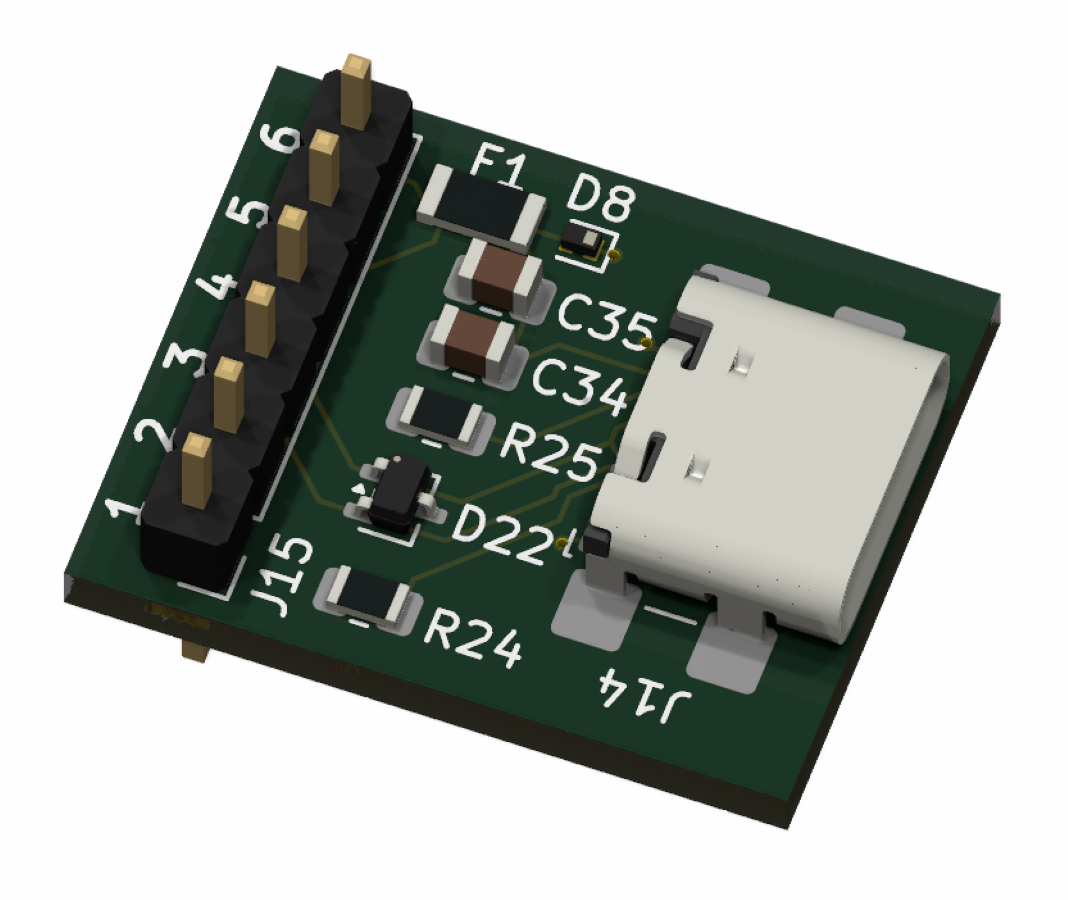
USB-C Breakout
This USB-C Breakout Module features pin headers for VDD, GND, and the differential data pairs. The module is hard wired with 5.1k CC resistors, configuring it as a 5v sink (This module receives 5v, it's used to power your board). The module features comprehensive ESD & current protections, including diodes on VBUS and data pairs, a polyfuse and a 10uF capacitor.
- ESD protected
- CC resistors on-board
- Sink (Recieved power)
- 6-8$
U2
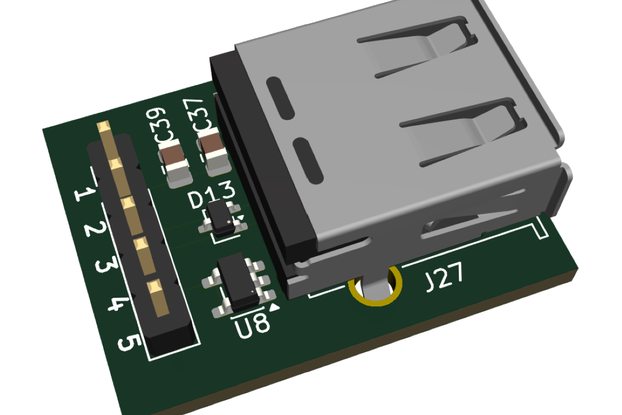
USB-A Breakout
This USB-A Breakout Module features pin headers for VDD, GND, and the differential data pairs. The module is a USB-A receptacle with +5v VBUS and host-side hardware (this USB module provides power from your board, to the peripheral). The module features an AP2171W power switch for USB VBUS. The module features comprehensive ESD & overcurrent protections, including diodes on data pairs along with decoupling capacitors & the power switch.
- ESD protected
- On-board power switch
- Source (powers peripheral)
- 6-8$
U3
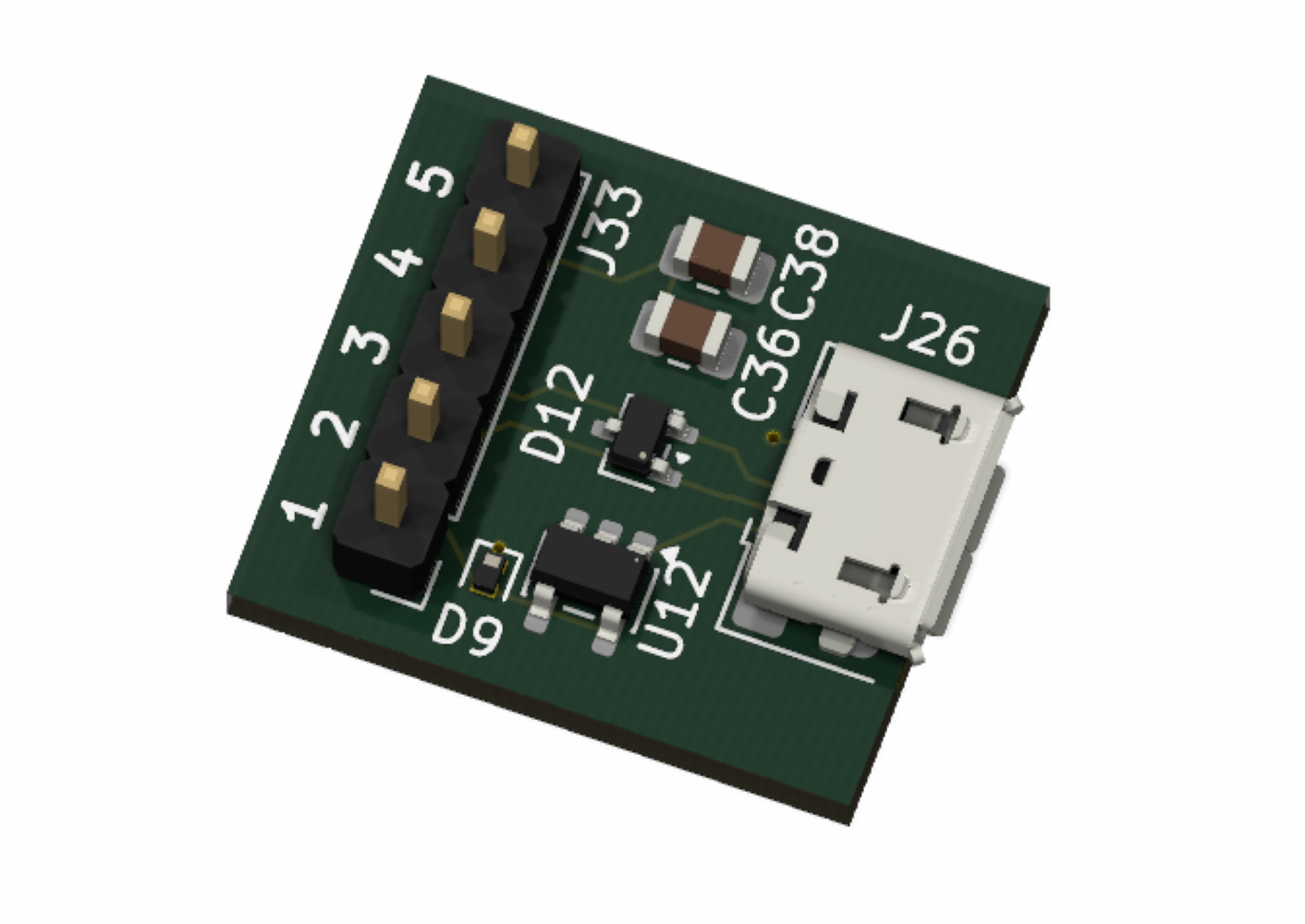
Micro USB-B Breakout
This Micro USB-B Breakout Module features pin headers for VDD, GND, and the differential data pairs. The module features an AP2171W power switch for USB VBUS. The module features comprehensive ESD and current protections, including diodes on VBUS and data pairs, along with decoupling capacitors & the power switch. This USB-B is configured as a Host, which means your board provides the USB-B female port with power, to supply external peripherals.
- ESD protected
- On-board power switch
- Source (powers peripheral)
- 6-8$
U4
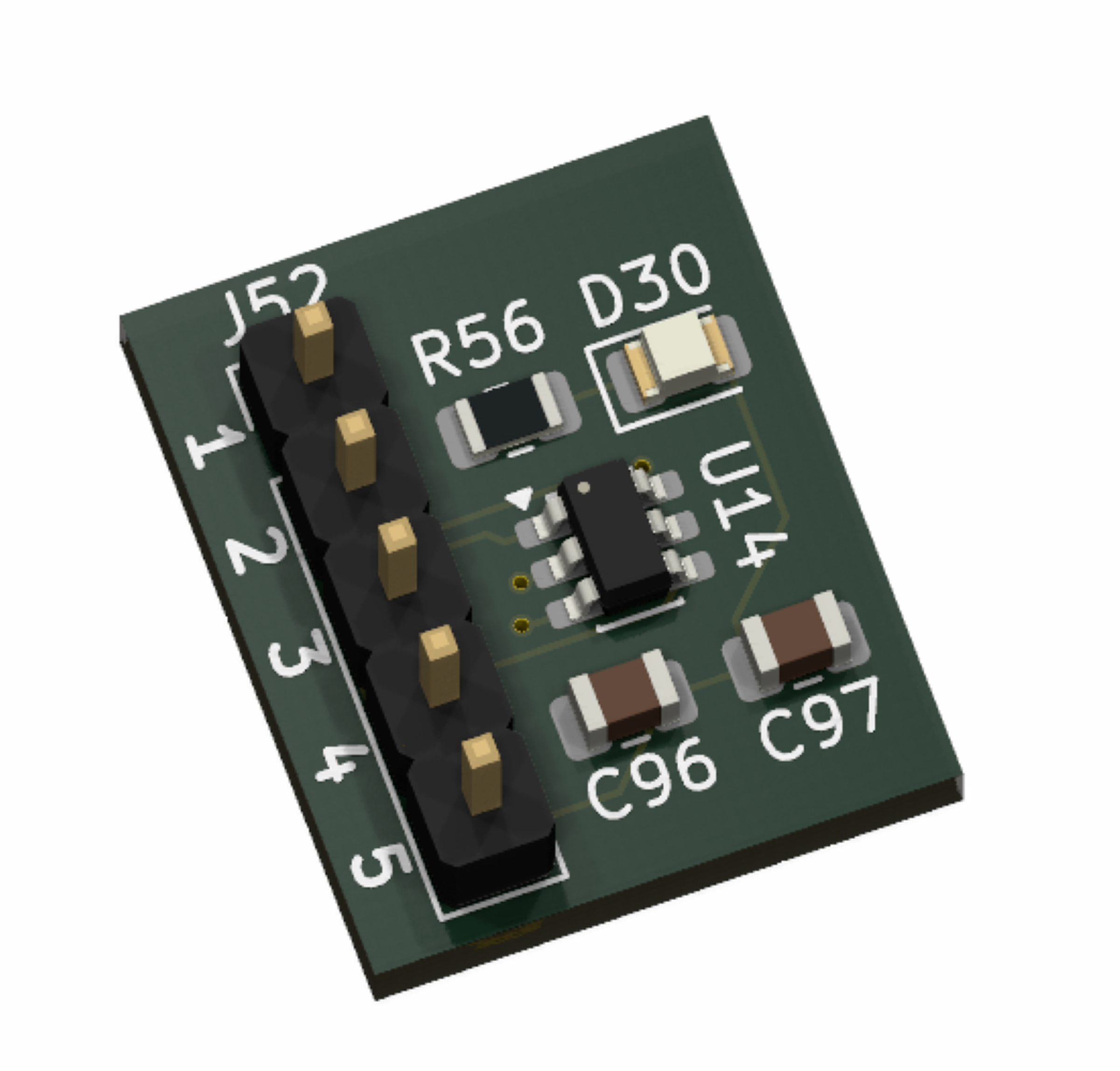
DAC Breakout — MCP4725
The MCP4725 is a 12 bit digital to analog converter (DAC) with integrated EEPROM. This board breaks out GND, VDD, SDA, SCL & VOUT (output). The operating voltage of the DAC is 2.7-5.5v and typically has a 6 micro second settling time. This module features 1uF & 100nF capacitors on VDD, and an LED indicating good power. The A0 address pin is tied to GND by default, giving it a 0x60 I2C address.
- 12-bit, I2C
- Pin Breakouts
- 3.3V-5V typically
- 6-8$
U5
CMOS Timer — MIC1555
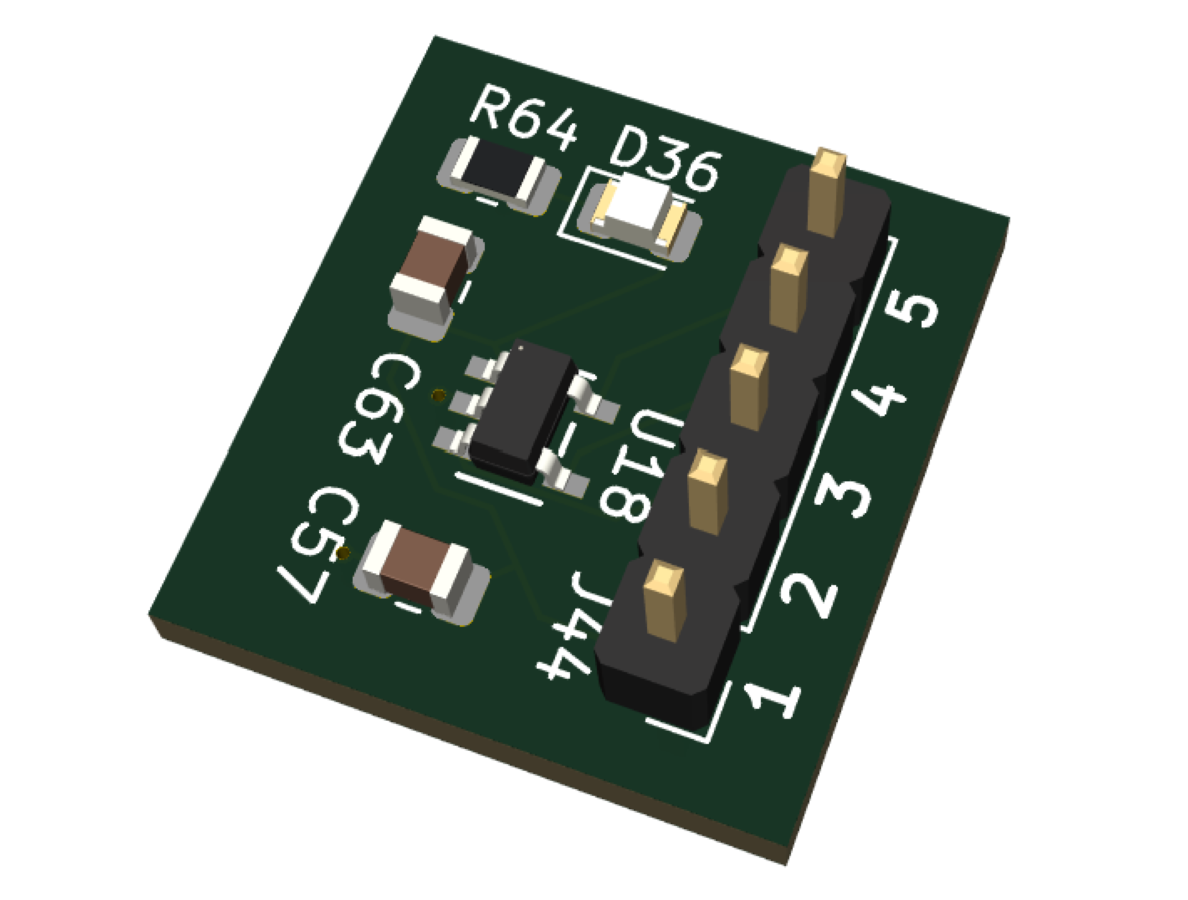
The Meridian MIC1555 breakout brings a compact CMOS timer onto five 0.1-inch-spaced header connections, making it easier to build timing circuits on a breadboard without working directly with the tiny SOT-23 package. The board includes 100 nF and 10 µF supply-decoupling capacitors and a power indicator LED. The external timing resistor and capacitor are not included; add these using the example circuit or your own calculated values.
- One-shot/monostable
- Oscillator/astable
- 5MHz Max
- 6-8$
U6
Digi-POT Breakout — MCP4661T
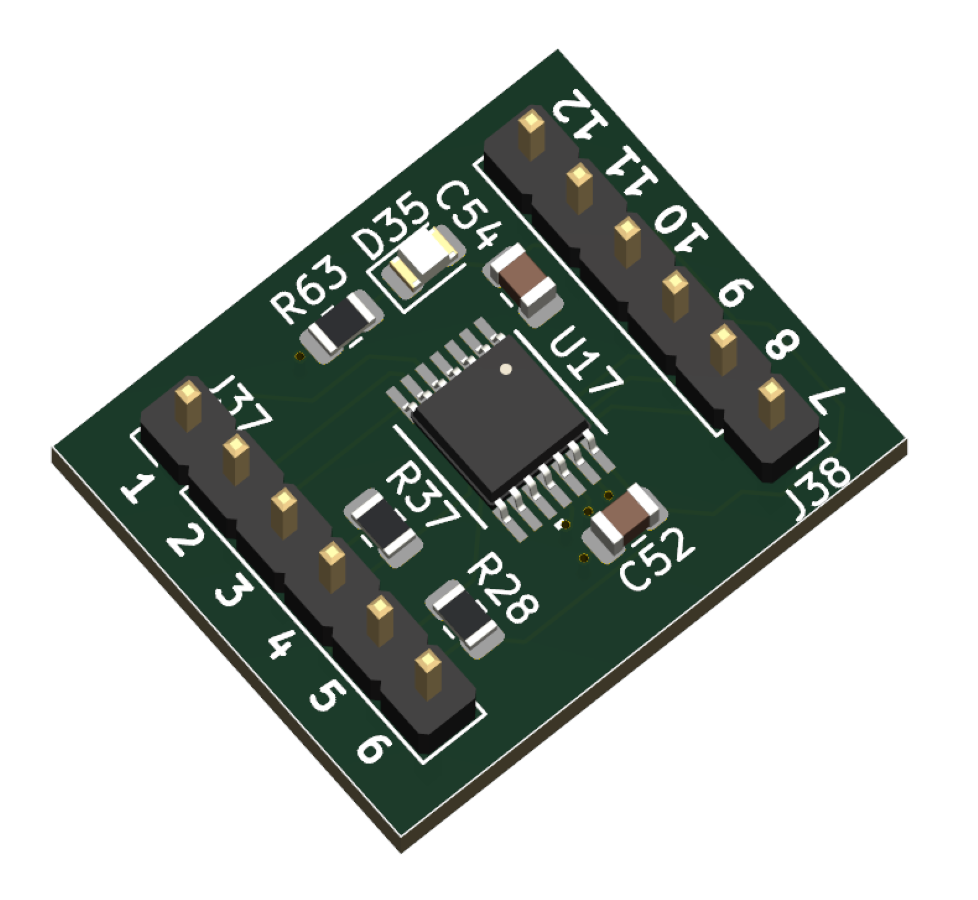
This board features an MCP4661T, which is a 100 kΩ (±20%), 8-bit/257 step, Dual-Circuit Digital Potentiometer. The board operating voltage is 2.7v-5.5v, and features pin headers for I2C, ground, power, and analog terminals. This board can also act as a programmable voltage divider, using the terminals as a voltage range, and W (access) as the voltage output. This board features an LED for power, a 10uF ceramic and 100nF ceramic capacitors, along with 4.7k pull up resistors for SCL and SDA. (All address pins are tied to ground).
- 8-bit resolution
- 100k Ohm
- Dual-Circuit
- 6-8$
U7
ATMEGA328P Breadboard Kit
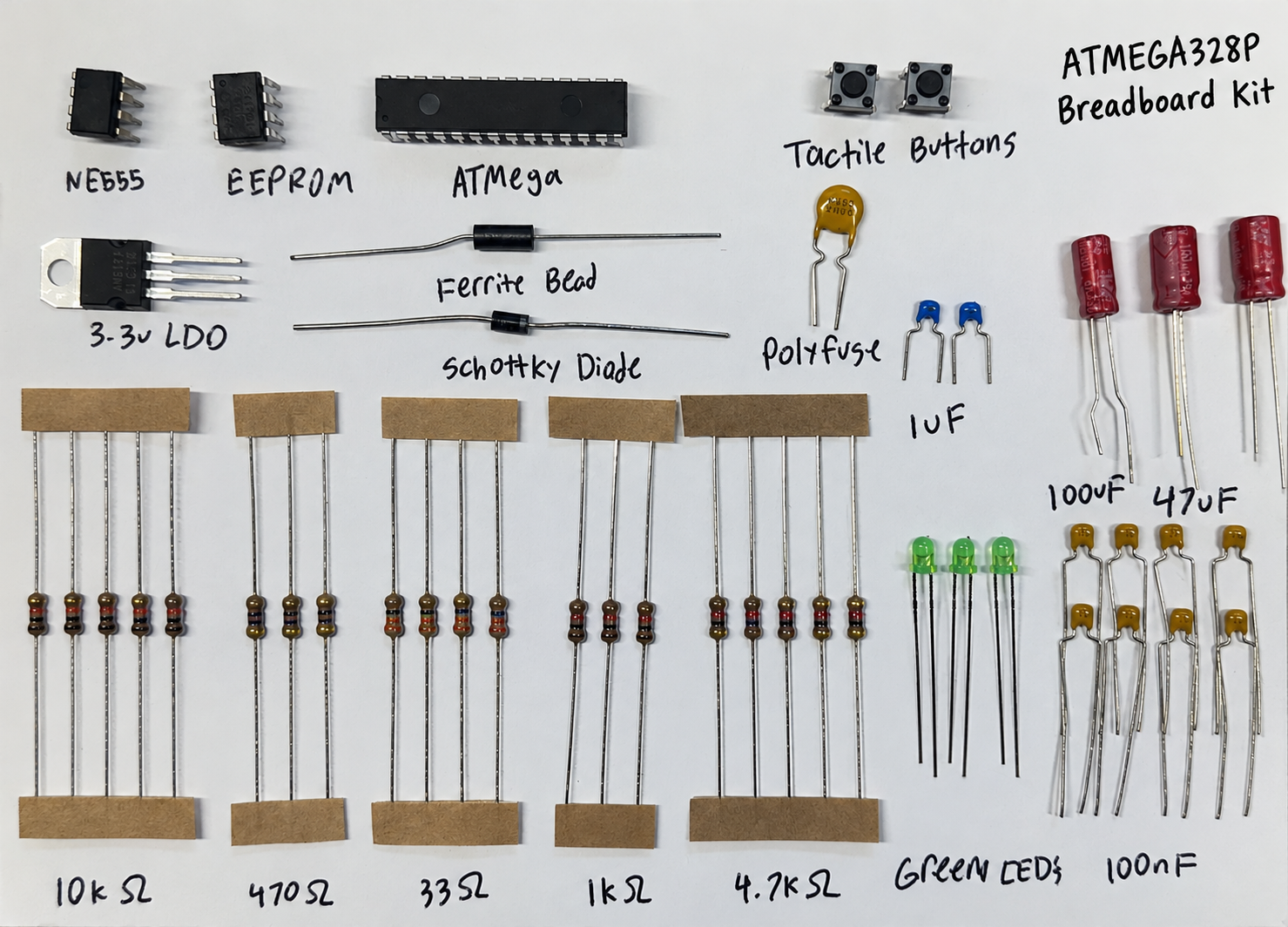
This ATMEGA328 Breadboard kit allows you to build out your very own MCU on a breadboard/protoboard. The ATMEGA328 is the chip used on the famous Arduino Uno, and it features 32KB of Flash and 2KB SRAM. The chip runs on 1.8-5.5v and can reach a top frequency of 20MHz (at 4.5v+). Native programming is available via SPI, however the preinstalled bootloader allows uploading sketches over UART.
- 18 components (+1 programmer)
- Pre-burned bootloader
- Breadboard & Protoboard friendly
- 12-18$
U8
ATMEGA4809 Breadboard Kit
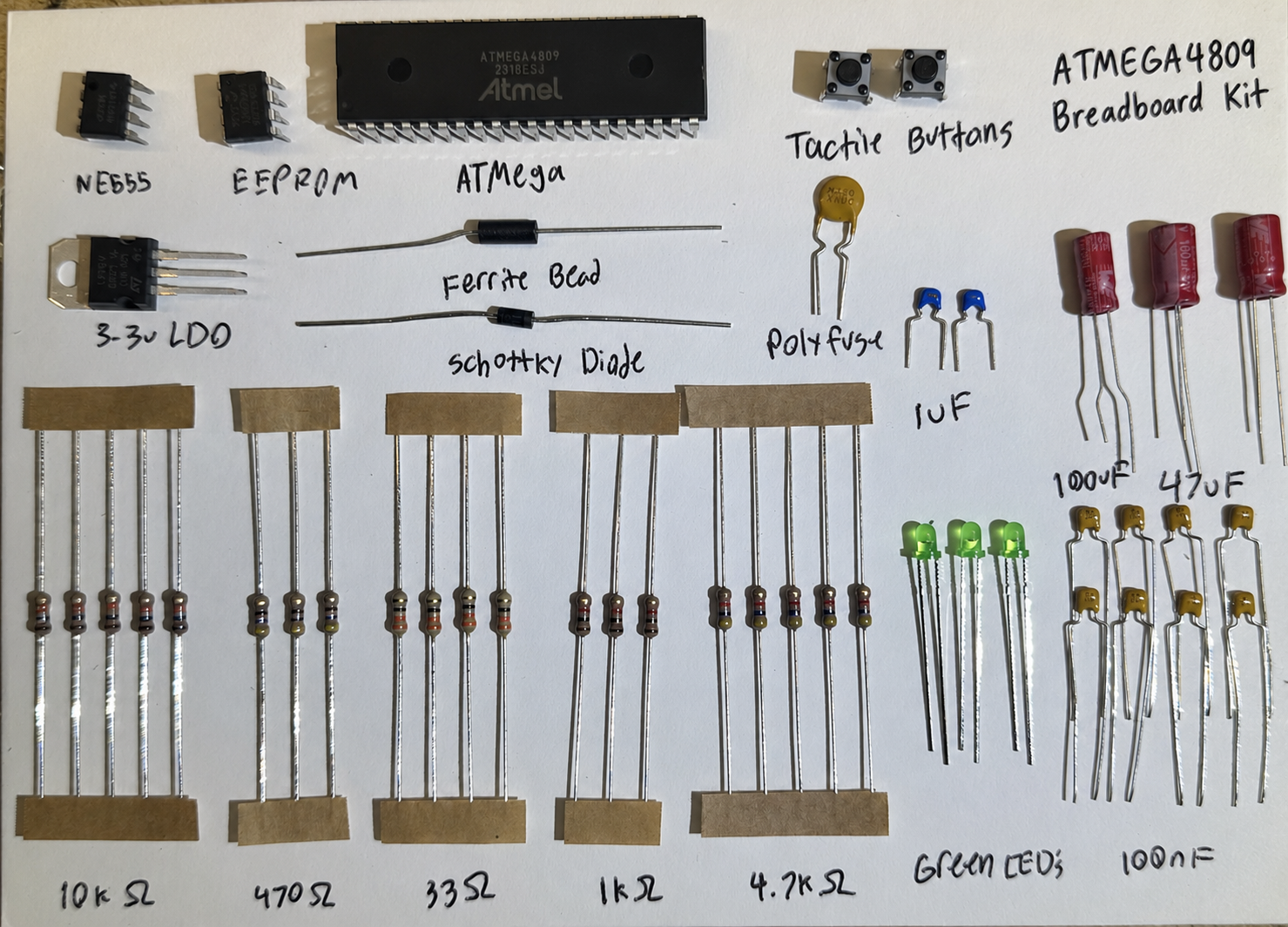
This ATMEGA4809 Breadboard kit allows you to build out your very own MCU on a breadboard/protoboard. The ATMEGA4809 includes 48KB of Flash and 6KB SRAM. The chip runs from 1.8-5.5v and can reach a top frequency of 20MHz (voltage dependent). The ATMEGA4809 is a part of the newer megaAVR 0-series. Programming is available via UPDI, which is a single line serial connection. If you use the USB-UART programmer, by connecting RX to UPDI pin, and TX to UPDI through a 4.7kΩ series resistor, it functions as a USB-UPDI programmer.
- 18 components (+1 programmer)
- UPDI Programming
- Breadboard & Protoboard friendly
- 12-18$